
Hapi - (★ 9183 on GitHub) is s a simple to use configuration-centric server framework with built-in support for input validation, caching, authentication, and other essential facilities for building web and services applications. hapi enables developers to focus on writing reusable application logic in a highly modular and prescriptive approach.
#js #nodejs #server #framework
#js #nodejs #server #framework

The most popular online source code hosting is undoubtedly GitHub. The second is Bitbucket. And these services are de-facto standards in our industry to store a project code. But what if you want to host your source code locally, inside your organisation on your own server?
One of the most known self-hosting solutions is GitLab. Written on Ruby and providing rich functionality, it requires considerable resources from your server. But what if you want just only keep your code, and you have an only small server, such as RaspberryPI?
The most popular solution here is Gogs (★ 24,700 on GitHub). This is the very lightweight self-hosting system that looks like GitHub clone, giving everything you need to keep the code and communicate with your teammates via pull requests. Furthermore, it doesn't consume a bunch of resources, so you can easily run it even on RaspberryPI. There is only one issue with that tool: it is owned by one person and he keeps under his control the whole workflow. As result, the project is developed not so fast as many would want to.
As a response to that circumstance, the new fork was created. It is called Gitea (★ 6,477 on GitHub). The main purpose of this project is to make a community-driven project with the simple voting model. As result, many issues are closed fast, pull requests are merged to the master branch more actively and the community itself is utterly friendly.
Both Gogs and Gitea are fantastic tools and I highly recommend to use them for your team.
#git #selfhosted #server #go
One of the most known self-hosting solutions is GitLab. Written on Ruby and providing rich functionality, it requires considerable resources from your server. But what if you want just only keep your code, and you have an only small server, such as RaspberryPI?
The most popular solution here is Gogs (★ 24,700 on GitHub). This is the very lightweight self-hosting system that looks like GitHub clone, giving everything you need to keep the code and communicate with your teammates via pull requests. Furthermore, it doesn't consume a bunch of resources, so you can easily run it even on RaspberryPI. There is only one issue with that tool: it is owned by one person and he keeps under his control the whole workflow. As result, the project is developed not so fast as many would want to.
As a response to that circumstance, the new fork was created. It is called Gitea (★ 6,477 on GitHub). The main purpose of this project is to make a community-driven project with the simple voting model. As result, many issues are closed fast, pull requests are merged to the master branch more actively and the community itself is utterly friendly.
Both Gogs and Gitea are fantastic tools and I highly recommend to use them for your team.
#git #selfhosted #server #go

Ktor - (★ 3,898 on GitHub) is a Kotlin framework for building asynchronous servers and clients in connected systems. It is being created by the Kotlin team, and as such, it takes full advantage of the language in order to provide a great developer experience and excellent runtime performance.
Recently the 1.0 version was released.
#kotlin #server #async
Recently the 1.0 version was released.
#kotlin #server #async

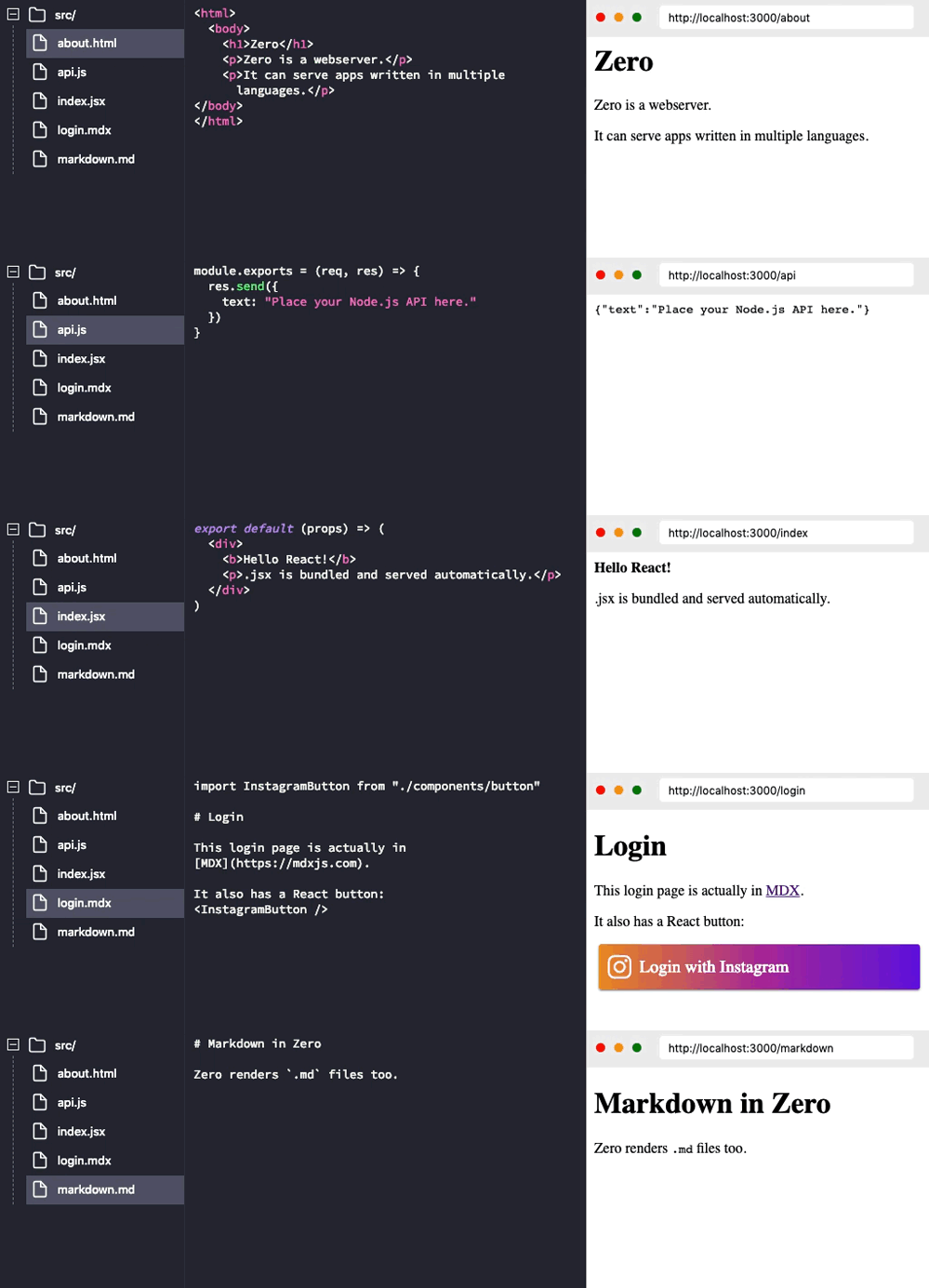
Zero Server - (★ 3,471 on GitHub) is a web framework to simplify modern web development.
It allows you to build your application without worrying about package management or routing. It's as simple as writing your code in a mix of Node.js, React, HTML, MDX, and static files and putting them all in a folder. Zero will serve them all. Zero abstracts the usual project configuration for routing, bundling, and transpiling to make it easier to get started.
#nodejs #js #npm #server
It allows you to build your application without worrying about package management or routing. It's as simple as writing your code in a mix of Node.js, React, HTML, MDX, and static files and putting them all in a folder. Zero will serve them all. Zero abstracts the usual project configuration for routing, bundling, and transpiling to make it easier to get started.
#nodejs #js #npm #server
Algernon - (★ 1,015 on GitHub) is a web server with built-in support for QUIC, HTTP/2, Lua, Markdown, Pongo2, HyperApp, Amber, Sass(SCSS), GCSS, JSX, BoltDB (built-in, stores the database in a file, like SQLite), Redis, PostgreSQL, MariaDB/MySQL, rate limiting, graceful shutdown, plugins, users and permissions.
All in one small self-contained executable.
#go #fullstack #server #web #allinone
All in one small self-contained executable.
#go #fullstack #server #web #allinone

cerbos - (★2.1k at GitHub) is an authorization layer that evolves with your product. It enables you to define powerful, context-aware access control rules for your application resources in simple, intuitive YAML policies; managed and deployed via your Git-ops infrastructure. It provides highly available APIs to make simple requests to evaluate policies and make dynamic access decisions for your application.
#auth #permissions #devops #microservice #server
#auth #permissions #devops #microservice #server
👍2