
git-chglog (★ 235) is the CHANGELOG generator.
● High portability
• It works with single binary. Therefore, any project (environment) can be used.
● Simple usability
• The CLI usage is very simple and has low learning costs.
• For example, the simplest command is $ git-chglog.
● High flexibility
• Commit message format and ...
• CHANGELOG's style (Template) and ...
• etc ...
#git #changelog #go
● High portability
• It works with single binary. Therefore, any project (environment) can be used.
● Simple usability
• The CLI usage is very simple and has low learning costs.
• For example, the simplest command is $ git-chglog.
● High flexibility
• Commit message format and ...
• CHANGELOG's style (Template) and ...
• etc ...
#git #changelog #go

Flutter (★ 12272 on GitHub) is Google’s mobile UI framework for crafting high-quality native interfaces on iOS and Android in record time. Flutter works with existing code, is used by developers and organizations around the world, and is free and open source. Written on Dart. Now in beta.
#dart #mobile #beta #native
#dart #mobile #beta #native

Shiori (★ 1328) is a simple bookmarks manager. Intended as a simple clone of Pocket. You can use it as command line application or as web application. This application is distributed as a single binary, which means it can be installed and used easily. Written in Go.
#bookmarks #cli #go
#bookmarks #cli #go

Hyperapp.js (★ 11602 on GitHub) is the 1 kB JavaScript framework for building web applications.
● Minimal — We have aggressively minimized the concepts you need to understand while remaining on par with what other frameworks can do.
● Pragmatic — Hyperapp holds firm on the functional programming front when managing your state, but takes a pragmatic approach to allowing for side effects, asynchronous actions, and DOM manipulations.
● Standalone — Do more with less. Hyperapp combines state management with a virtual DOM engine that supports keyed updates & lifecycle events — all with no dependencies.
Please also read the article "Hyperapp for Redux refugees" where author explains why Hyperapp can be easier and simpler than React+Redux.
#js #frontend #react #redux
● Minimal — We have aggressively minimized the concepts you need to understand while remaining on par with what other frameworks can do.
● Pragmatic — Hyperapp holds firm on the functional programming front when managing your state, but takes a pragmatic approach to allowing for side effects, asynchronous actions, and DOM manipulations.
● Standalone — Do more with less. Hyperapp combines state management with a virtual DOM engine that supports keyed updates & lifecycle events — all with no dependencies.
Please also read the article "Hyperapp for Redux refugees" where author explains why Hyperapp can be easier and simpler than React+Redux.
#js #frontend #react #redux

Hapi - (★ 9183 on GitHub) is s a simple to use configuration-centric server framework with built-in support for input validation, caching, authentication, and other essential facilities for building web and services applications. hapi enables developers to focus on writing reusable application logic in a highly modular and prescriptive approach.
#js #nodejs #server #framework
#js #nodejs #server #framework

Emitter (★ 821 on GitHub) is a real-time communication service for connecting online devices. Infrastructure and APIs for IoT, gaming, apps and real-time web. At its core, emitter.io is a distributed, scalable and fault-tolerant publish-subscribe messaging platform based on MQTT protocol and featuring message storage.
Emitter can be used for online gaming and mobile apps by satisfying the requirements for low latency, binary messaging and high throughput. It can also be used for the real-time web application such as dashboards or visual analytics or chat systems. Moreover, Emitter is perfect for the internet of things and allows sensors to be controlled and data gathered and analyzed.
#MQTT #broker #go
Emitter can be used for online gaming and mobile apps by satisfying the requirements for low latency, binary messaging and high throughput. It can also be used for the real-time web application such as dashboards or visual analytics or chat systems. Moreover, Emitter is perfect for the internet of things and allows sensors to be controlled and data gathered and analyzed.
#MQTT #broker #go

Oragono (★ 372 on GitHub) is a modern, experimental IRC server written in Go. It's designed to be simple to setup and use, and it includes features such as UTF-8 nicks / channel names, client accounts with SASL, and other assorted IRCv3 support.
If you are a paranoid and want modern, fast, secure and reliable way of communication, then Oragono could be a good choice for you.
#irc #chat #messenger #go
If you are a paranoid and want modern, fast, secure and reliable way of communication, then Oragono could be a good choice for you.
#irc #chat #messenger #go

TANDEM (★ 470 on gitHub) is a decentralized, collaborative text-editing solution.
Collaborating is as easy as installing the plugin on your editor and creating a Tandem Session.
Tandem is split into four components: the editor plugins, the networking agent, the conflict-free replicated data type (CRDT) solution, and the rendezvous server.
At the moment only three editors are supported: Sublime text3, NeoVim and Vim.
Few months ago Atom and VsCode also announced their solution.
#collaboration #editing #python
Collaborating is as easy as installing the plugin on your editor and creating a Tandem Session.
Tandem is split into four components: the editor plugins, the networking agent, the conflict-free replicated data type (CRDT) solution, and the rendezvous server.
At the moment only three editors are supported: Sublime text3, NeoVim and Vim.
Few months ago Atom and VsCode also announced their solution.
#collaboration #editing #python
Vimeo
Tandem Demo
http://typeintandem.com
Mark Text (★ 1363 on GitHub) is a Markdown editor for Mac, Windows, and Linux. It is a concise text editor, dedicated to improving your editing efficiency. Written on Electron.
Features
● Realtime preview and use snabbdom as its render engine.
● Support CommonMark Spec and GitHub Flavored Markdown Spec.
● Support paragraphs and inline style shortcuts to improve your writing efficiency.
● Output HTML and PDF file.
● Dark and Light themes.
● Various edit mode: Source Code mode, Typewriter mode, Focus mode.
#js #editing #markdown #editor
Features
● Realtime preview and use snabbdom as its render engine.
● Support CommonMark Spec and GitHub Flavored Markdown Spec.
● Support paragraphs and inline style shortcuts to improve your writing efficiency.
● Output HTML and PDF file.
● Dark and Light themes.
● Various edit mode: Source Code mode, Typewriter mode, Focus mode.
#js #editing #markdown #editor

Authenticator (★ 73) is two-factor authentication code desktop generator for GNOME. Created with love using Python and Gtk.
Features:
● QR code scanner
● Beautiful UI
● Huge database of (290+) websites/applications
Please read also article at OMGUbuntu.
#linux #authentication
Features:
● QR code scanner
● Beautiful UI
● Huge database of (290+) websites/applications
Please read also article at OMGUbuntu.
#linux #authentication

Testcontainers recently passed over 1000 stars threshold. It is an perfect reason to pen a post about this utterly useful library.
Intro
When you write unit-tests for your code, you usually mock all the external dependencies, such as database calls or message queue polling. But what if you need to make integration tests with real dependencies? Usually, it is quite tricky, because in this case, you have to have real services installed in your system, which is not very convenient. Say, you want to write integration tests working with a database, in this situation you need a real database running on your local machine.
As you can see, it is kind of a problem and not flexible at all, because you run tests on other developers computers and CI servers and all these guys also need to run the database to make tests passing. Is there any convenient solution?
Solution
Introducing Testcontainers (★ 1006). This java-library allows you to set up your dependencies right from your integration tests using Docker containers. Your tests remain independent of other services because each test set up an individual environment for its runtime.
Look how easy to use it. Say, you need a Redis for your test, then you add the class rule like so:
and a spare Redis will be available for your tests on the 6379 port.
Please, refer to official documentation for more examples. This library also exists as a plugin for Spock framework and Scala tests.
#java #docker #tests #container #spock #scala
Intro
When you write unit-tests for your code, you usually mock all the external dependencies, such as database calls or message queue polling. But what if you need to make integration tests with real dependencies? Usually, it is quite tricky, because in this case, you have to have real services installed in your system, which is not very convenient. Say, you want to write integration tests working with a database, in this situation you need a real database running on your local machine.
As you can see, it is kind of a problem and not flexible at all, because you run tests on other developers computers and CI servers and all these guys also need to run the database to make tests passing. Is there any convenient solution?
Solution
Introducing Testcontainers (★ 1006). This java-library allows you to set up your dependencies right from your integration tests using Docker containers. Your tests remain independent of other services because each test set up an individual environment for its runtime.
Look how easy to use it. Say, you need a Redis for your test, then you add the class rule like so:
// Set up a redis container
@ClassRule
public static GenericContainer redis =
    new GenericContainer("redis:3.0.2")
        .withExposedPorts(6379);
and a spare Redis will be available for your tests on the 6379 port.
Please, refer to official documentation for more examples. This library also exists as a plugin for Spock framework and Scala tests.
#java #docker #tests #container #spock #scala

Release: CockroachDB 2.0 Has Arrived! 🎉
CockroachDB (★ 13037 on GitHub) is the open source, cloud-native SQL database.
CockroachDB is a distributed SQL database built on a transactional and strongly-consistent key-value store. It scales horizontally; survives disk, machine, rack, and even datacenter failures with minimal latency disruption and no manual intervention; supports strongly-consistent ACID transactions; and provides a familiar SQL API for structuring, manipulating, and querying data.
#release #sql #cloud #db
CockroachDB (★ 13037 on GitHub) is the open source, cloud-native SQL database.
CockroachDB is a distributed SQL database built on a transactional and strongly-consistent key-value store. It scales horizontally; survives disk, machine, rack, and even datacenter failures with minimal latency disruption and no manual intervention; supports strongly-consistent ACID transactions; and provides a familiar SQL API for structuring, manipulating, and querying data.
#release #sql #cloud #db

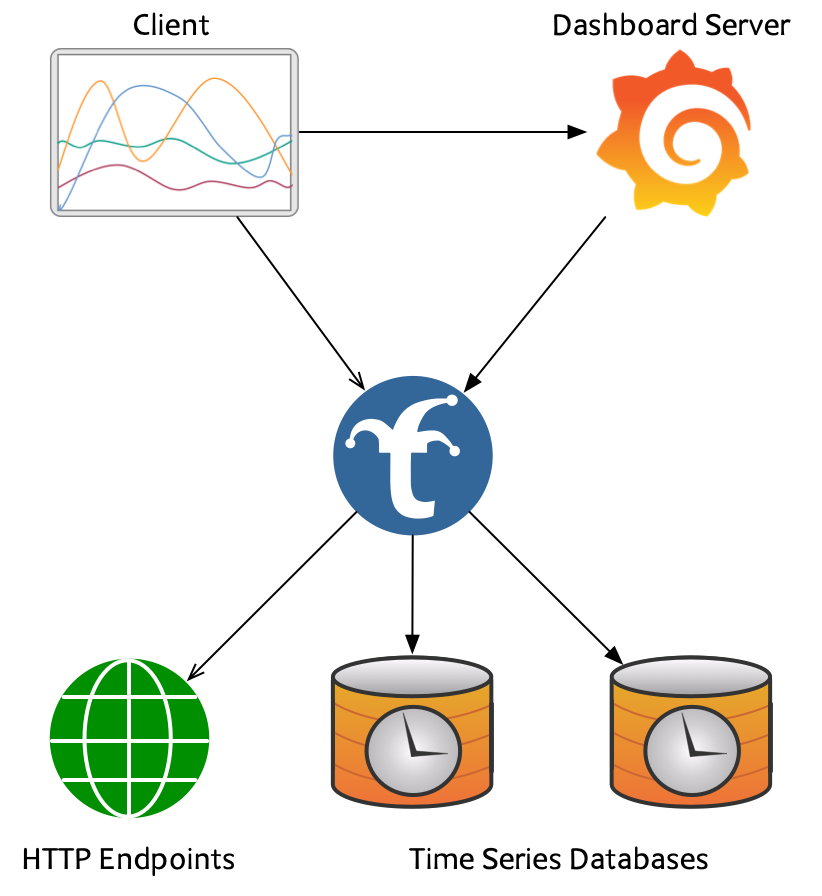
Trickster (★ 233) is a reverse proxy cache for the Prometheus HTTP APIv1 that dramatically accelerates dashboard rendering times for any series queried from Prometheus.
Most dashboards request the entire time range of data from the time series database, every time a dashboard loads or reloads. Trickster's Delta Proxy inspects the time range of a client query to determine what data points are already cached, and requests from Prometheus only the data points still needed to service the client request. This results in dramatically faster chart load times for everyone, since Prometheus is queried only for tiny incremental changes on each dashboard load, rather than several hundred data points of duplicative data.
#prometheus #dashboard #monitoring #caching #proxy
Most dashboards request the entire time range of data from the time series database, every time a dashboard loads or reloads. Trickster's Delta Proxy inspects the time range of a client query to determine what data points are already cached, and requests from Prometheus only the data points still needed to service the client request. This results in dramatically faster chart load times for everyone, since Prometheus is queried only for tiny incremental changes on each dashboard load, rather than several hundred data points of duplicative data.
#prometheus #dashboard #monitoring #caching #proxy
Hi everyone! What kind of useful stuff is the most interesting for you? What would you like to see on this channel?
Frontend, JS – 23
👍👍👍👍👍👍👍 43%
Backend libs, frameworks – 12
👍👍👍👍 22%
The channel content is fine, keep going! – 7
👍👍 13%
DevOps utilities and tips – 5
👍👍 9%
Developer tools, IDEs, helpful scripts – 5
👍👍 9%
Security tools, hacking – 2
👍 4%
Design widgets, CSS
▫️ 0%
Wider range of programming languages and platforms
▫️ 0%
👥 54 people voted so far. Poll closed.
Frontend, JS – 23
👍👍👍👍👍👍👍 43%
Backend libs, frameworks – 12
👍👍👍👍 22%
The channel content is fine, keep going! – 7
👍👍 13%
DevOps utilities and tips – 5
👍👍 9%
Developer tools, IDEs, helpful scripts – 5
👍👍 9%
Security tools, hacking – 2
👍 4%
Design widgets, CSS
▫️ 0%
Wider range of programming languages and platforms
▫️ 0%
👥 54 people voted so far. Poll closed.
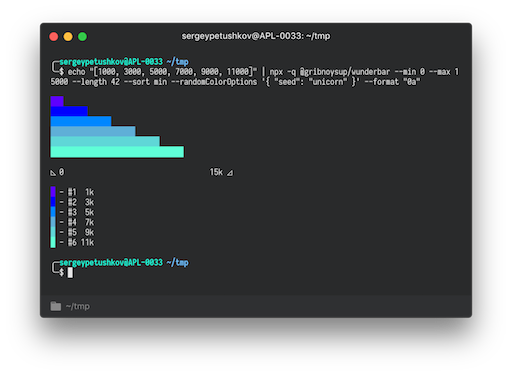
gotop (★179) is yet another TUI graphical activity monitor, inspired by
#monitoring #terminal #cli
gtop and vtop.#monitoring #terminal #cli


Because of Telegram blockage in some countries, VPN and proxy servers are utterly useful these days. Here is the list of the most popular tools and scripts helping to install all the necessary software for your privacy.
● StreisandEffect (★ 14,297) - the collection of Ansible cookbooks, that helps you to install a new server running your choice of WireGuard, OpenConnect, OpenSSH, OpenVPN, Shadowsocks, sslh, Stunnel, and a Tor bridge. It also generates custom instructions for all of these services. At the end of the run, you are given an HTML file with instructions that can be shared with friends, family members, and fellow activists. The very good choice you can start with.
● Algo VPN (★ 8,277) - is a set of Ansible scripts that simplify the setup of a personal IPSEC VPN. It uses the most secure defaults available, works with common cloud providers, and does not require client software on most devices.
● openvpn-install (★ 6,602) - OpenVPN road warrior installer for Debian, Ubuntu, and CentOS. This Shell script will let you set up your own VPN server in no more than a minute, even if you haven't used OpenVPN before. It has been designed to be as unobtrusive and universal as possible.
● sovereign (★ 6,921) - is a set of Ansible playbooks that you can use to build and maintain your own personal cloud-based entirely on open source software, so you’re in control. This script helps you to install: IMAP over SSL with full-text search, POP3 over SSL, SMTP over SSL, Spam fighting, Mobile push notifications, Jabber/XMPP, RSS Reader, CalDAV and CardDAV, your own private storage, VPN, IRC, Git hosting, Web hosting and many more...
And there are few SOCKS5 links for your Telegram
● SS5 - is a socks server that implements the SOCKS v4 and v5 protocol.
● Dante - A free SOCKS server
● 3proxy - tiny free proxy server
● ShadowSocks - A secure socks5 proxy, designed to protect your Internet traffic.
● go-socks5 library (★ 485) - golang package that implements SOCKS5 protocol.
If you think I should add some another stuff that I missed, please email to me, and I will update this post. Let's keep it up to date together. Thanks!
#privacy #censorship #proxy #security #vpn
● StreisandEffect (★ 14,297) - the collection of Ansible cookbooks, that helps you to install a new server running your choice of WireGuard, OpenConnect, OpenSSH, OpenVPN, Shadowsocks, sslh, Stunnel, and a Tor bridge. It also generates custom instructions for all of these services. At the end of the run, you are given an HTML file with instructions that can be shared with friends, family members, and fellow activists. The very good choice you can start with.
● Algo VPN (★ 8,277) - is a set of Ansible scripts that simplify the setup of a personal IPSEC VPN. It uses the most secure defaults available, works with common cloud providers, and does not require client software on most devices.
● openvpn-install (★ 6,602) - OpenVPN road warrior installer for Debian, Ubuntu, and CentOS. This Shell script will let you set up your own VPN server in no more than a minute, even if you haven't used OpenVPN before. It has been designed to be as unobtrusive and universal as possible.
● sovereign (★ 6,921) - is a set of Ansible playbooks that you can use to build and maintain your own personal cloud-based entirely on open source software, so you’re in control. This script helps you to install: IMAP over SSL with full-text search, POP3 over SSL, SMTP over SSL, Spam fighting, Mobile push notifications, Jabber/XMPP, RSS Reader, CalDAV and CardDAV, your own private storage, VPN, IRC, Git hosting, Web hosting and many more...
And there are few SOCKS5 links for your Telegram
● SS5 - is a socks server that implements the SOCKS v4 and v5 protocol.
● Dante - A free SOCKS server
● 3proxy - tiny free proxy server
● ShadowSocks - A secure socks5 proxy, designed to protect your Internet traffic.
● go-socks5 library (★ 485) - golang package that implements SOCKS5 protocol.
If you think I should add some another stuff that I missed, please email to me, and I will update this post. Let's keep it up to date together. Thanks!
#privacy #censorship #proxy #security #vpn

gh-ost (★ 4,403) - is a triggerless online schema migration solution for MySQL. It is testable and provides pausability, dynamic control/reconfiguration, auditing, and many operational perks. Created by GitHub's team.
#migration #schema #mysql
#migration #schema #mysql

The most popular online source code hosting is undoubtedly GitHub. The second is Bitbucket. And these services are de-facto standards in our industry to store a project code. But what if you want to host your source code locally, inside your organisation on your own server?
One of the most known self-hosting solutions is GitLab. Written on Ruby and providing rich functionality, it requires considerable resources from your server. But what if you want just only keep your code, and you have an only small server, such as RaspberryPI?
The most popular solution here is Gogs (★ 24,700 on GitHub). This is the very lightweight self-hosting system that looks like GitHub clone, giving everything you need to keep the code and communicate with your teammates via pull requests. Furthermore, it doesn't consume a bunch of resources, so you can easily run it even on RaspberryPI. There is only one issue with that tool: it is owned by one person and he keeps under his control the whole workflow. As result, the project is developed not so fast as many would want to.
As a response to that circumstance, the new fork was created. It is called Gitea (★ 6,477 on GitHub). The main purpose of this project is to make a community-driven project with the simple voting model. As result, many issues are closed fast, pull requests are merged to the master branch more actively and the community itself is utterly friendly.
Both Gogs and Gitea are fantastic tools and I highly recommend to use them for your team.
#git #selfhosted #server #go
One of the most known self-hosting solutions is GitLab. Written on Ruby and providing rich functionality, it requires considerable resources from your server. But what if you want just only keep your code, and you have an only small server, such as RaspberryPI?
The most popular solution here is Gogs (★ 24,700 on GitHub). This is the very lightweight self-hosting system that looks like GitHub clone, giving everything you need to keep the code and communicate with your teammates via pull requests. Furthermore, it doesn't consume a bunch of resources, so you can easily run it even on RaspberryPI. There is only one issue with that tool: it is owned by one person and he keeps under his control the whole workflow. As result, the project is developed not so fast as many would want to.
As a response to that circumstance, the new fork was created. It is called Gitea (★ 6,477 on GitHub). The main purpose of this project is to make a community-driven project with the simple voting model. As result, many issues are closed fast, pull requests are merged to the master branch more actively and the community itself is utterly friendly.
Both Gogs and Gitea are fantastic tools and I highly recommend to use them for your team.
#git #selfhosted #server #go
