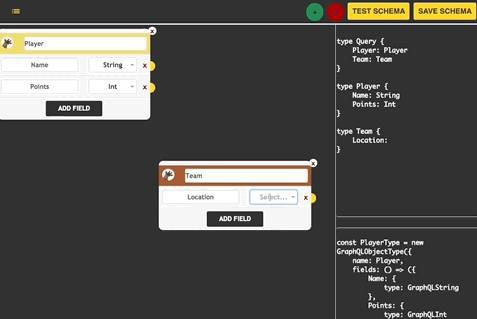
TeaVM - is quite peculiar web framework. You write the code on Java/Kotlin/Scala and it transforms the code to JavaScript to be run in a browser. It sounds like old-school GWT framework, but the biggest difference is GWT parses Java source code, but TeaVM parses the compiled java byte code. This makes compilation much faster than GWT and it supports the latests features from JVM languages. As author says, the compiled JS is significantly smaller, than on Angular or ReactJS. So, today you can use your favourite Kotlin both on backend and frontend :3
#weird #javascript #jvm
http://teavm.org/
#weird #javascript #jvm
http://teavm.org/
If you have a dozens or even hundreds of microservices and all of them expose their APIs to the rest of the world, you often need to manage the same things for every service separately, such as authentication/authorization, security checks, load balancing and etc... In this case an API Gateway could be useful, becuase it builds sort of "façade" for your APIs and allows to manage all APIs in one place. Here are few open source solutions:
• Kong, has 12,3k stars on GitHub. Build in Lua language on top of Nginx. Provides a lot of ready plugins for security and Auth, rate-limit, caching, logging and etc...
• Tyk, has 2,4k stars on GitHub. Build on Go. Provides many features out-of-the-box, such as web Dashboard, with monitoring, API documentation, Mocks for testing, notifications and many more...
#api #gateway #microservice
• Kong, has 12,3k stars on GitHub. Build in Lua language on top of Nginx. Provides a lot of ready plugins for security and Auth, rate-limit, caching, logging and etc...
• Tyk, has 2,4k stars on GitHub. Build on Go. Provides many features out-of-the-box, such as web Dashboard, with monitoring, API documentation, Mocks for testing, notifications and many more...
#api #gateway #microservice
https://boostnote.io - Open source note-taking app designed for programmers. Desktop and mobile apps are available. Written in JS 😔
#js #app #mobile
#js #app #mobile
Say, you have a blog (may be created using a static site generator) and you want to add comments to it. In this scenario the most common solution is to use Disqus, which could be integrated to your site and keep all the conversations on their side. It is very convenient, but this solution has few drawbacks. Firstly, Disqus loads a lot of scripts to a browser that inevitably affects the loading time. Secondly,
1) Schnack.js, (★ 268), written in Node.js, supports authentication via Twitter and GitHub, avatars, admin panel. Requires SQlite. Easy to use and install.
2) Discourse, (★ 23044), very powerful platform written in Ruby on Rails. Check out their site for the full list of features, it is huge. But the installation is quite complicated and it is greedy for a resources from your server.
3) Isso, (★ 2461) looks very similar to Disqus, but written on Python. The result JS file is very lightweight (12kb gzipped), supports importing from Disqus and Wordpress, but does not provide third-party authentication.
4) Commento, (★ 2020) written in Go, very lightweight, looks nice, but the functionality is very limited.
[paranoia mode: on] it collects too many information about your users [paranoia mode: off]. Here are few open sourse alternatives for Disqus.1) Schnack.js, (★ 268), written in Node.js, supports authentication via Twitter and GitHub, avatars, admin panel. Requires SQlite. Easy to use and install.
2) Discourse, (★ 23044), very powerful platform written in Ruby on Rails. Check out their site for the full list of features, it is huge. But the installation is quite complicated and it is greedy for a resources from your server.
3) Isso, (★ 2461) looks very similar to Disqus, but written on Python. The result JS file is very lightweight (12kb gzipped), supports importing from Disqus and Wordpress, but does not provide third-party authentication.
4) Commento, (★ 2020) written in Go, very lightweight, looks nice, but the functionality is very limited.
Responsive email is hard. A quick and dirty solution is to use some ready service, such as Mailchimp that provides online drag-n-drop constructor to build template for your email. The result code is horrible, but it works. What if you want to write emails by yourself but you want to make it easy and fast? One solution is to use special markup languages that allows you to separate the layout and scaring inline style hacks. Here are few promising open source options for you.
1) HEML (★ 2136). Looks very similar to html, but contains some email-specific tags. HEML has clean documentation and online editor
2) MJML (★ 5865). Quite mature project with the large community. Unlike HTML it looks more like XML, but still very compact. However, when you add a tag attributes, the code looks messy, but again it is better than pure HTML. MJML also has very nice online constructor, but in addition you can install their desktop app to work offline (written on Electron). You might want to check their large library of ready templates with source codes to use.
#emails #js #responsive
1) HEML (★ 2136). Looks very similar to html, but contains some email-specific tags. HEML has clean documentation and online editor
2) MJML (★ 5865). Quite mature project with the large community. Unlike HTML it looks more like XML, but still very compact. However, when you add a tag attributes, the code looks messy, but again it is better than pure HTML. MJML also has very nice online constructor, but in addition you can install their desktop app to work offline (written on Electron). You might want to check their large library of ready templates with source codes to use.
#emails #js #responsive
RediSearch is open source (★761) full-text search engine built on top of Redis. It is the nice lightweight alternative to Solr and ElasticSearch. Written in C.
#search #redis
#search #redis
https://worldbrain.io - a free browser extension to search for every word of every website & PDF you visited or bookmarked. The data is stored and indexed only on your local computer and won't be accessible to anyone else. At the moment the project in Beta status. Check the video demonstration for the details.
#extension #search #beta #browser
#extension #search #beta #browser
Alacritty (★ 7642) - the fastest terminal emulator. It uses GPU to render fonts. If you work a lot in the terminal and edit your code in Emacs or Vim, then you probably spot the difference. I worked few weeks with Alactitty and I can say it worth to try. Written in Rust. You can install it only from the source files so far, so you have to clone the repo and compile it by yourself on your computer. Hovewer, the tutorial is quite understandable and itundefineds easy to follow it. Furthermore, the configuration is availably only via text files. And the most annoying is the lack of scrollback. But all the drawbacks will be fixed and implemented in the future.
#terminal #emulator #rust
#terminal #emulator #rust

Two code editors have announced their collaboration tools that allow developers to write code in real-time:
1) Visual Studio Live Share based on VSCode
2) Atom Teletype, Beta
1) Visual Studio Live Share based on VSCode
2) Atom Teletype, Beta
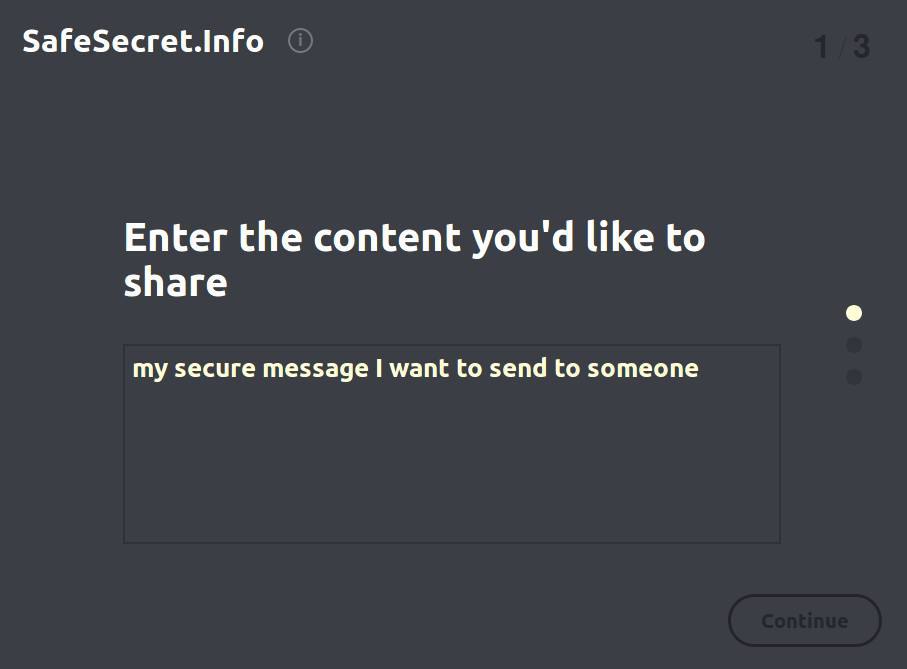
SafeSecret is a simple service made for a single purpose: sharing confidential information in an easy, quick and secure way. Think of it as writing a paper note, letting someone read it, then burning it.
#security #secret
#security #secret

GitHub introduces Team Discussions. No need to have issues cluttered with discussions or Pull Request flooded with lengthy conversations that aren’t related to your code changes, now all these talks have a new home.
#github #team #discussions
#github #team #discussions
The GitHub Blog
Introducing team discussions
Working together on software is so much more than writing code. Processes like planning, analysis, design, user research, documentation, and general project decision-making all play a part in the build process. Now there’s a new
Scrollama (★ 440) is a modern & lightweight JavaScript library for scrollytelling. Check the examples section to see how it works
#js #scrollytelling
#js #scrollytelling
tldr (★ 11331, GitHub) is the simplified and community-driven man pages. Have you ever struggled to find needed information in a man page? The TLDR pages are a community effort to simplify the beloved man pages with practical examples. Anyone can add or edit the content of any page to make them more useful and easy to read.
#cli #js #terminal #help
#cli #js #terminal #help

FreeType - is a popular font rendering engine. Since the 2.7 release it supports a new default mode for bytecode hinting - Subpixel hinting. So, if you work on Linux and you hate its font rendering (especially on high resolution monitors), I recommend you to install this engine to your computer.
Here are instructions (for Ubuntu), how to install the engine from PPA repositories:
and restart your computer. You will notice the difference straight away
#linux #font #lifehack #advice
Here are instructions (for Ubuntu), how to install the engine from PPA repositories:
 sudo add-apt-repository ppa:no1wantdthisname/ppa
 sudo apt update
 sudo apt install libfreetype6 fontconfig-infinality
and restart your computer. You will notice the difference straight away
#linux #font #lifehack #advice
SausageWiki (★ 35) is very simple, self-contained Wiki engine, written on Rust. Only one executable, one database file. Easy to run, easy to backup.
#wiki #rust
#wiki #rust

The ConcourseCI has been released new version 3.7.0 full of new features and fixes. One of new major feature is they are experimenting with new UI, which is still in beta status. The developers are collecting feedback and discuss all the new UI improvements.
The ConcourseCI - is the continuous Integration (CI) system written by Pivotal. The main feature is that all the jobs are executed inside a docker containers, that allows to have a repeatable and reliable builds which are language-agnostic. All the building processes has form of pipeline, which gives you flexibility to implement any build, even the most complex. For a live example, see Concourse's own pipeline.
There is one good introduction presentation (in Russian) to ConcourseCI.
The ConcourseCI - is the continuous Integration (CI) system written by Pivotal. The main feature is that all the jobs are executed inside a docker containers, that allows to have a repeatable and reliable builds which are language-agnostic. All the building processes has form of pipeline, which gives you flexibility to implement any build, even the most complex. For a live example, see Concourse's own pipeline.
There is one good introduction presentation (in Russian) to ConcourseCI.

Akaunting is a free, open source and online accounting software designed for small businesses and freelancers. GitHub, (★ 333), written on PHP.
Have a lovely Monday everyone!
#accounting #php
Have a lovely Monday everyone!
#accounting #php