
hurl - (★5.2k at GitHub) - is a command line tool that runs HTTP requests defined in a simple plain text format.
It can chain requests, capture values and evaluate queries on headers and body response. Hurl is very versatile: it can be used for both fetching data and testing HTTP sessions.
Hurl makes it easy to work with HTML content, REST / SOAP / GraphQL APIs, or any other XML / JSON based APIs.
#http #testing #cli #rust
It can chain requests, capture values and evaluate queries on headers and body response. Hurl is very versatile: it can be used for both fetching data and testing HTTP sessions.
Hurl makes it easy to work with HTML content, REST / SOAP / GraphQL APIs, or any other XML / JSON based APIs.
#http #testing #cli #rust

👍4❤1
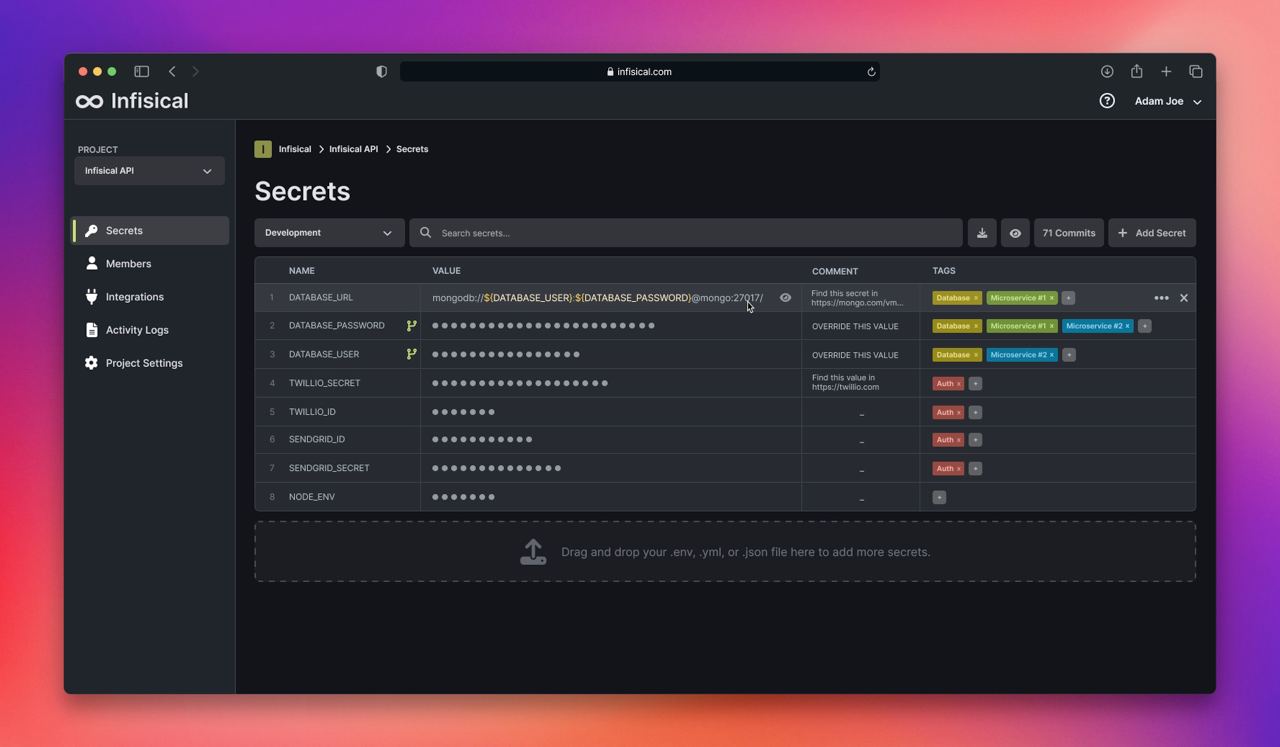
Infisical - (★8.4k on GitHub) is an open-source, end-to-end encrypted platform for secret management: sync secrets across your team/infrastructure and prevent secret leaks.
features:
● User-friendly dashboard to manage secrets across projects and environments (e.g. development, production, etc.)
● Client SDKs to fetch secrets for your apps and infrastructure on demand
● Infisical CLI to fetch and inject secrets into any framework in local development
● Native integrations with platforms like GitHub, Vercel, Netlify, and more
● Automatic Kubernetes deployment secret reloads
● Complete control over your data - host it yourself on any infrastructure
● Secret versioning and Point-in-Time Recovery to version every secret and project state
● Audit logs to record every action taken in a project
● Role-based Access Controls per environment
● Simple on-premise deployments to AWS, Digital Ocean, and more
● Secret Scanning and Leak Prevention
#vault #secrets #security #devops
features:
● User-friendly dashboard to manage secrets across projects and environments (e.g. development, production, etc.)
● Client SDKs to fetch secrets for your apps and infrastructure on demand
● Infisical CLI to fetch and inject secrets into any framework in local development
● Native integrations with platforms like GitHub, Vercel, Netlify, and more
● Automatic Kubernetes deployment secret reloads
● Complete control over your data - host it yourself on any infrastructure
● Secret versioning and Point-in-Time Recovery to version every secret and project state
● Audit logs to record every action taken in a project
● Role-based Access Controls per environment
● Simple on-premise deployments to AWS, Digital Ocean, and more
● Secret Scanning and Leak Prevention
#vault #secrets #security #devops
👍2🤪1
fzf - (★54.6k) is a general-purpose command-line fuzzy finder. It's an interactive Unix filter for command-line that can be used with any list; files, command history, processes, hostnames, bookmarks, git commits, etc.
And if you want to use fzf with your zsh, then you can use:
fzf-tab - (★2.3k) replace zsh's default completion selection menu with fzf! Check the demo in README file
#cli #terminal
And if you want to use fzf with your zsh, then you can use:
fzf-tab - (★2.3k) replace zsh's default completion selection menu with fzf! Check the demo in README file
#cli #terminal
🔥2👍1
OpenAI's Code Interpreter - (★32.5k on GitHub) lets LLMs run code (Python, Javascript, Shell, and more) locally. You can chat with Open Interpreter through a ChatGPT-like interface in your terminal by running $ interpreter after installing.
This provides a natural-language interface to your computer's general-purpose capabilities:
- Create and edit photos, videos, PDFs, etc.
- Control a Chrome browser to perform research
- Plot, clean, and analyze large datasets
- ...etc.
#ai #code
This provides a natural-language interface to your computer's general-purpose capabilities:
- Create and edit photos, videos, PDFs, etc.
- Control a Chrome browser to perform research
- Plot, clean, and analyze large datasets
- ...etc.
#ai #code

👍4

Encore - (★4.1k at GitHub) is a backend development platform that automatically provisions infrastructure — from developing locally to scaling on AWS/GCP. It's designed to help you build your product without platform distractions, removes boilerplate, and comes with built-in tools for observability and collaboration.
To get an idea about how it works, take a look at this 5-minutes intruduction video
#deployment #build #provisioning
To get an idea about how it works, take a look at this 5-minutes intruduction video
#deployment #build #provisioning

👍2
cerbos - (★2.1k at GitHub) is an authorization layer that evolves with your product. It enables you to define powerful, context-aware access control rules for your application resources in simple, intuitive YAML policies; managed and deployed via your Git-ops infrastructure. It provides highly available APIs to make simple requests to evaluate policies and make dynamic access decisions for your application.
#auth #permissions #devops #microservice #server
#auth #permissions #devops #microservice #server
👍2

PR-Agent - (★ 3k) is an open-source tool to help efficiently review and handle pull requests. It automatically analyzes the pull request and can provide several types of commands:
-
-
-
-
-
-
-
#ai #github #pr #code #review
-
/describe: Automatically generating PR description-
/review: Adjustable feedback about the PR main content-
/ask ...: Answering free-text questions about the PR-
/improve: Committable code suggestions for improving the PR. -
/update_changelog: Automatically updating the CHANGELOG.md file-
/add_docs: Automatically adds documentation to methods/functions/classes-
/analyze: Automatically analyzes the PR#ai #github #pr #code #review

👍1🎅1
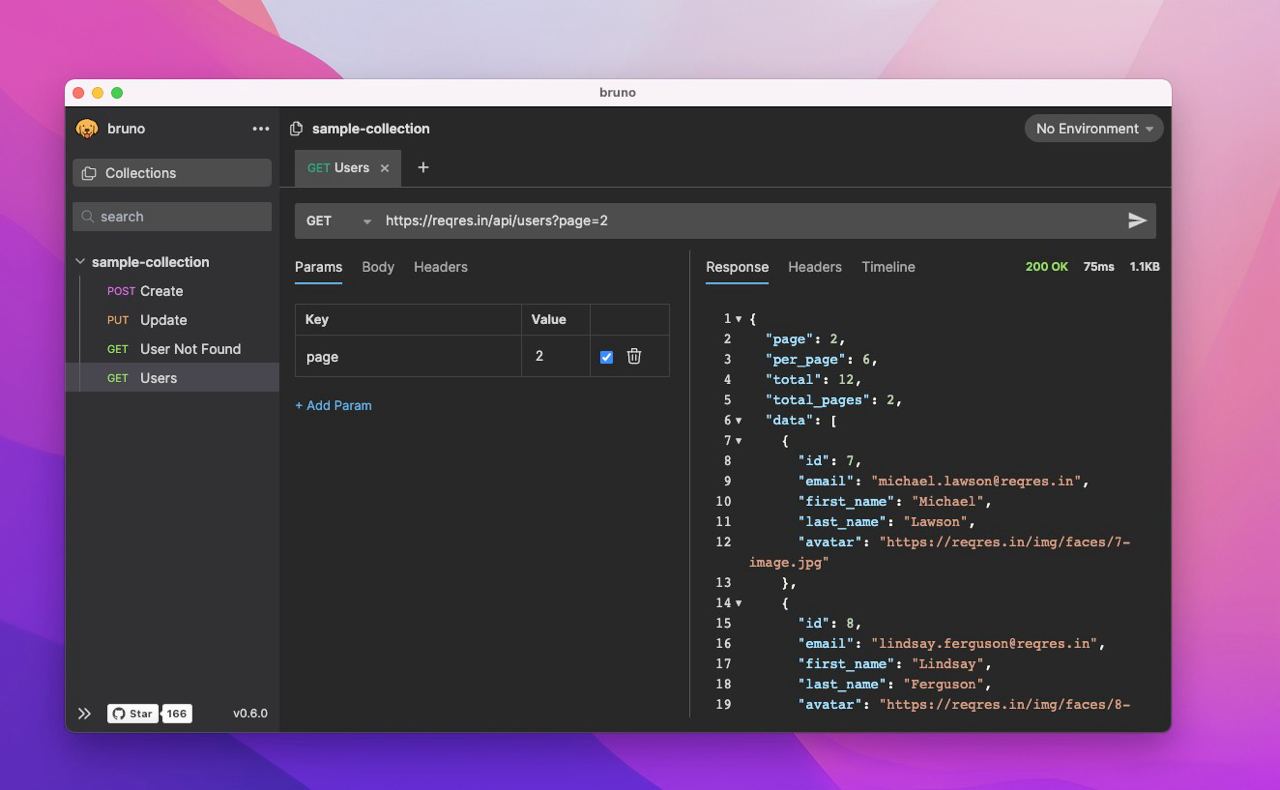
Bruno - (★ 11k at GitHub) is the opensource IDE For Exploring and Testing Api's (lightweight alternative to postman/insomnia).
If you think that Postman grew up into a monster, then try Bruno. Bruno is a new and innovative API client, aimed at revolutionizing the status quo represented by Postman and similar tools out there.
Bruno stores your collections directly in a folder on your filesystem. We use a plain text markup language, Bru, to save information about API requests.
You can use Git or any version control of your choice to collaborate over your API collections.
#rest #api #testing #curl
If you think that Postman grew up into a monster, then try Bruno. Bruno is a new and innovative API client, aimed at revolutionizing the status quo represented by Postman and similar tools out there.
Bruno stores your collections directly in a folder on your filesystem. We use a plain text markup language, Bru, to save information about API requests.
You can use Git or any version control of your choice to collaborate over your API collections.
#rest #api #testing #curl
👍4
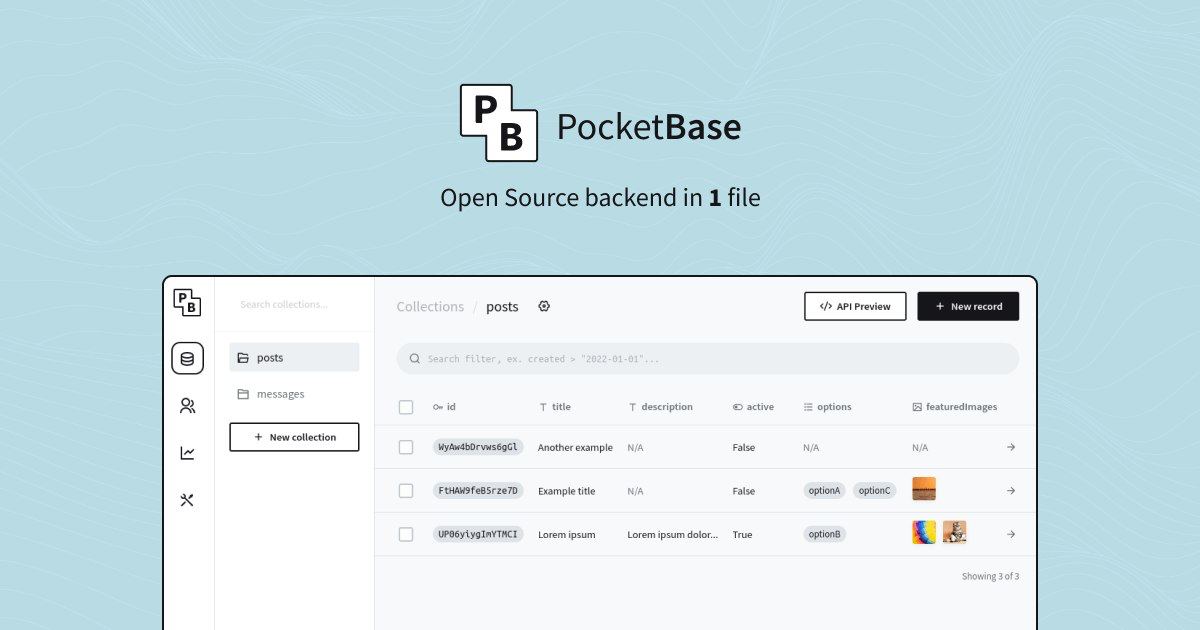
PoketBase - (★ 31.5k at GitHub) Open Source backend for your next SaaS and Mobile app in 1 file.
It consists of:
● embedded database (SQLite) with realtime subscriptions
● built-in files and users management
● convenient Admin dashboard UI
● and simple REST-ish API
#mobile #backend #mock #api #testing
It consists of:
● embedded database (SQLite) with realtime subscriptions
● built-in files and users management
● convenient Admin dashboard UI
● and simple REST-ish API
#mobile #backend #mock #api #testing
❤3👍3
CUE - (★ 4.6k at GitHub) is an open source data constraint language which aims to simplify tasks involving defining and using data. It is a superset of JSON, allowing users familiar with JSON to get started quickly.
You can use CUE to:
● define a detailed validation schema for your data (manually or automatically from data)
● reduce boilerplate in your data (manually or automatically from schema)
● extract a schema from code
● generate type definitions and validation code
● merge JSON in a principled way
● define and run declarative scripts
#config #configuration #deployment
You can use CUE to:
● define a detailed validation schema for your data (manually or automatically from data)
● reduce boilerplate in your data (manually or automatically from schema)
● extract a schema from code
● generate type definitions and validation code
● merge JSON in a principled way
● define and run declarative scripts
#config #configuration #deployment

👍3






DangerZone - (★ 3.6k at GitHub) takes potentially dangerous PDFs, office documents, or images and converts them to a safe PDF.
Dangerzone works like this: You give it a document that you don't know if you can trust (for example, an email attachment). Inside of a sandbox, Dangerzone converts the document to a PDF (if it isn't already one), and then converts the PDF into raw pixel data: a huge list of RGB color values for each page. Then, in a separate sandbox, Dangerzone takes this pixel data and converts it back into a PDF.
#pdf #safety #sandbox
Dangerzone works like this: You give it a document that you don't know if you can trust (for example, an email attachment). Inside of a sandbox, Dangerzone converts the document to a PDF (if it isn't already one), and then converts the PDF into raw pixel data: a huge list of RGB color values for each page. Then, in a separate sandbox, Dangerzone takes this pixel data and converts it back into a PDF.
#pdf #safety #sandbox

👍4❤1